As solid substances appear in independent, regular, crystalline forms which are dependent, judging from their cleavage or lamination (in virtue of which mica breaks, up into laminae, and Iceland spar, &c., into pieces bounded by faces inclined to each other at angles which are definite for each substance), on an inequality of attraction (cohesion, hardness) in different directions which intersect at definite angles the determination of crystalline form therefore affords one of the most important characteristics for identifying definite chemical compounds. The elements of crystallography which comprise a special science should therefore he familiar to all who desire to work in scientific chemistry. In this work we shall only have occasion to speak of a few crystalline forms, some of which are shown in figs. 6 to 12. 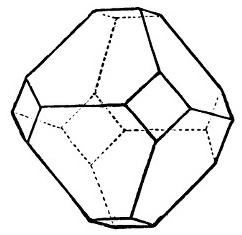 Fig. 6.—Example of the form belonging to the regular system. Combination of an octahedron and a cube. The former predominates. Alum, fluor spar, suboxide of copper, and others.
 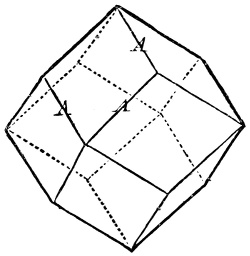 Fig. 7.—Rhombic Dodecahedron of the regular system. Garnet.
 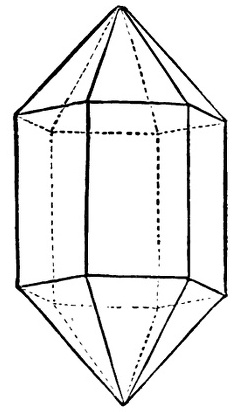 Fig. 8.—Hexagonal prism terminated by hexagonal pyramids. Quartz, &c.
Table of Contents
10
382